How do you actually make money trading meme coins without becoming exit liquidity?
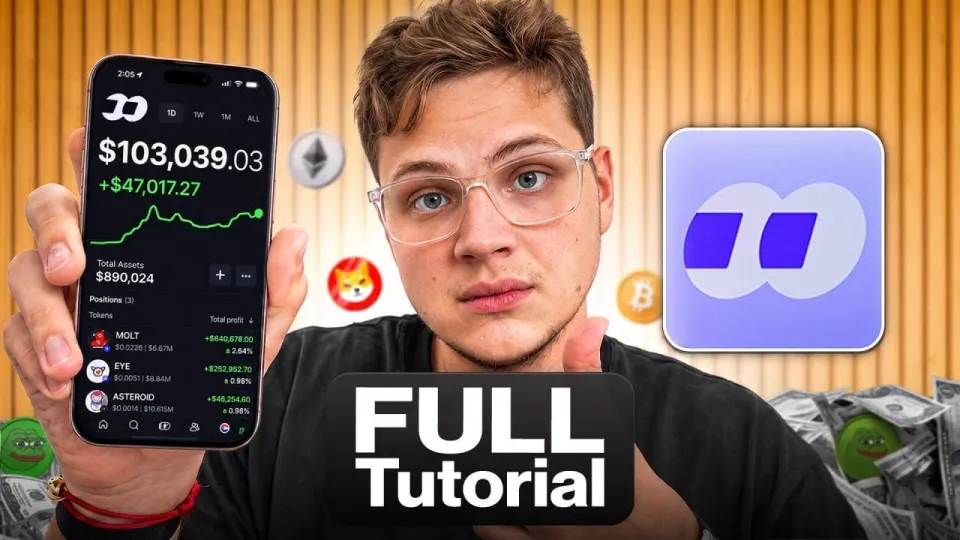
Video: How To Make Money Trading Memecoins (fomo app tutorial)
Want articles like this for your own video to promote it on YouTube and Google? Order them through the Telegram bot @sat_sit_bot. The bot writes and publishes the articles itself (with your YouTube video embedded) on popular topical websites (no ads). Free trial — 50 articles.
· based on the channel Orangie Web3
Meme coin trading can be profitable, but not by chasing every new token: the money comes from entering early with a small, fixed position and exiting on a pre-planned target before the crowd. In practice this means using a fast execution tool, sizing every trade as a fraction of the wallet and treating copy trading as a trap rather than a strategy. A practical starting point is the fomo trading platform, which combines token discovery, charts and execution in a single interface.
What a meme coin actually is and why it moves so fast
A meme coin is a token whose price is driven almost entirely by attention, narrative and liquidity rather than by revenue or product fundamentals. That makes it a pure supply-and-demand instrument: when a narrative catches on, order books on decentralized exchanges thin out and price can multiply in minutes; when attention fades, liquidity evaporates just as quickly.
On Solana, where most of this activity happens, tokens launch through launchpads and are tradeable within seconds. The practical consequences for a trader:
- There is no earnings report or valuation floor to anchor price — only the flow of buyers.
- Slippage is real: a large order into thin liquidity fills far above the quoted price.
- Rug pulls and insider distributions are common, so contract and holder checks are part of the job, not optional extras.
- Speed matters more than analysis depth; a thesis that takes an hour to build is usually worthless.
How to make money trading meme coins with the fomo app
The fomo app is a trading interface built for memecoins: it surfaces trending tokens, shows price charts and lets you buy or sell from a connected wallet without switching between several tabs. The workflow that makes money is boring and repeatable rather than clever.
- Fund a separate wallet. Keep a dedicated trading wallet with only the capital you are willing to lose, and never connect the main holdings wallet to new dApps.
- Screen for liquidity, not hype. Before buying, check that the pool has enough depth for your order size and that holders are not concentrated in a handful of addresses.
- Set position size first. A common rule is 1–5% of the trading wallet per position; that way five consecutive losers cost a fraction of the account, not the account itself.
- Define the exit before the entry. Decide the take-profit level (for example, selling half at 2x and letting the rest run) and the invalidation point where you cut the loss.
- Execute fast and log the trade. Record entry, exit, reason and result, so that after twenty trades you can see which setups actually pay.
The app's referral entry point is here: https://fomo.family/r/orangie — it opens the platform where new accounts are created and wallets connected.
Why copy trading usually makes you the exit liquidity
Copy trading feels like the shortcut, but it structurally puts you last in line. Large traders frequently buy a token on a separate wallet before buying on their main, publicly visible wallet; the moment followers pile in, that first position is already in profit and can be sold into the new demand. By the time a copied trade appears on your screen, the price has typically moved and the risk-reward has flipped.
A more honest use of watching big wallets is as a signal to research, not as an order ticket. If a well-known wallet buys something, the useful questions are: how deep is the liquidity, how concentrated are holders, and is there still room before the obvious resistance level? Copying the trade without those answers is how new traders become the liquidity that lets someone else exit.
Risk rules that separate traders from gamblers
Survival in memecoin trading is a risk-management problem before it is a picking problem. The traders who last are not the ones with the best calls; they are the ones who never let a single token decide their month.
- Fixed sizing: 1–5% of the trading wallet per position, no exceptions for "sure things".
- Daily loss limit: stop trading after losing a set percentage (for example 10%) in a day, because tilt is the most expensive emotion in this market.
- Liquidity check: avoid tokens where your intended order would move the price by several percent on entry.
- Holder concentration: a token where a few wallets control most of the supply is a distribution waiting to happen.
- Exit discipline: take profit in tranches and accept that selling too early is a feature, not a mistake.
- Wallet hygiene: revoke approvals and use fresh wallets for new launches.
Common questions new traders ask about meme coins
Beginners tend to raise the same handful of concerns, and they are the right ones to ask. The most frequent is speed: memecoin moves can be over in minutes, so users of trading apps consistently ask for price alerts rather than more charts — a notification at a level matters more than another indicator. The second is fear: after a wallet gets drained or a first position goes to zero, the market feels rigged, and the correct response is smaller size and better hygiene, not a bigger bet to recover.
The third is onboarding: many people want a simple, step-by-step walkthrough of the interface before risking money, which is exactly what a tutorial format solves. The fourth is whether profits are realistic — the honest answer is that small accounts can grow, but only when winners are allowed to run and losers are cut quickly, and when the trader tracks results instead of remembering only the wins.
Useful links
- fomo trading platform: https://fomo.family/r/orangie
- Community Discord: https://discord.gg/memecoins
- Author's Instagram: https://www.instagram.com/orangieyt/
Bottom line
Making money with meme coins is less about finding the next hundred-x token and more about process: a dedicated wallet, small fixed positions, a defined exit before entry and a hard stop on daily losses. The fomo app removes friction from discovery and execution, but it cannot remove the need for discipline — and copy trading, however tempting, usually means buying after the informed money already has. The walkthrough on the Orangie Web3 channel is a good starting point for learning the interface, and the platform itself is reachable through https://fomo.family/r/orangie. Start with an amount you can lose entirely, log every trade, and let the data tell you which setups deserve more size.
Key takeaways
- Memecoins are high-volatility tokens on chains like Solana; most gains come from early entries and fast exits, not from long-term holding.
- The fomo trading platform (https://fomo.family/r/orangie) bundles token discovery, charts and buy/sell execution in one interface.
- Copy trading is the biggest trap: large wallets often buy on a separate account first, so followers enter at a higher price.
- Risk rules that matter: fixed position size (1–5% of the wallet), pre-set take-profit levels and a hard stop on the daily loss limit.
- Price alerts are the most requested fomo feature among users, because memecoin moves can finish within minutes.
Questions & answers
How much money do you need to start trading meme coins?
You can start with a small amount such as $50–$100, because the goal at first is learning the process, not maximizing profit. Keep that capital in a separate wallet so a bad token cannot touch your main holdings. Position sizing of 1–5% per trade matters more than the total balance.
Is copy trading meme coins profitable?
Rarely for the follower. Large traders often buy on a separate wallet before buying on their public one, so by the time a copied trade is visible the price has already moved. Watching big wallets is useful for research, but the entry should be based on liquidity, holder concentration and your own exit plan.
Why do meme coin trades move so fast?
Prices are driven by attention and thin liquidity rather than fundamentals, so a burst of buyers can multiply the price in minutes and a burst of sellers can erase it. That is why price alerts and pre-set exit levels are more useful than long analysis. Speed of execution and discipline on exits decide the result.
What is the biggest risk in meme coin trading?
Losing the whole position, either through a rug pull or through holding a fading token too long. Holder concentration, shallow liquidity and unreviewed contracts are the warning signs. Fixed small position sizes, a daily loss limit and wallet hygiene keep a single bad trade from ending the account.
Source: How To Make Money Trading Memecoins (fomo app tutorial) · Markdown version